Extending Christ’s Grace for Our Blind Spots: When We Know Not What We Do
New Book: Extending Christ’s Grace for Our Blind Spots
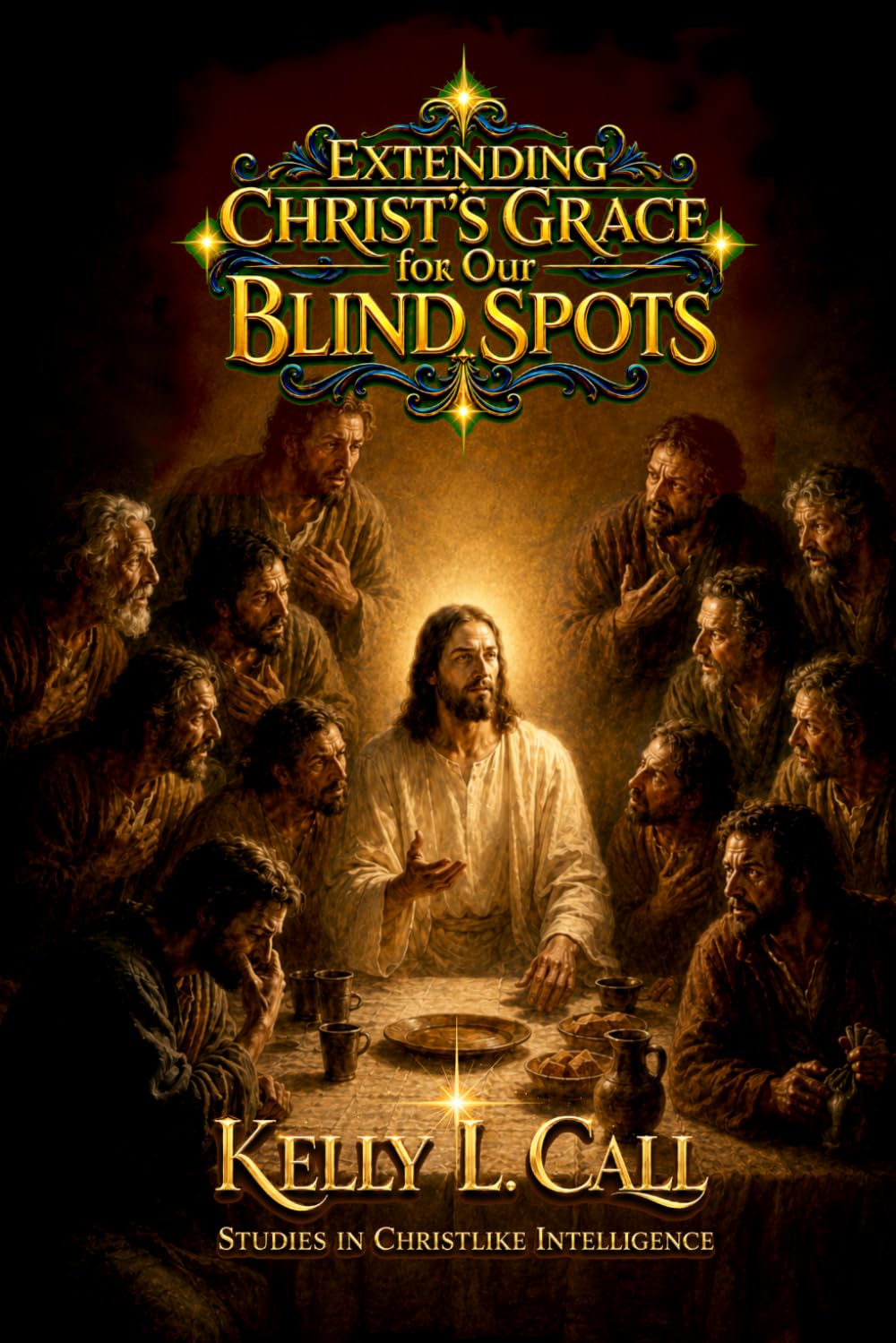
Extending Christ’s Grace for Our Blind Spots: When We Know Not What We Do is now available on Amazon.
We all have blind spots.
We do not see ourselves, others, motives, consequences, and spiritual realities with perfect clarity. Because of this, we sometimes harm people without fully knowing what we are doing. We judge what we do not fully understand. We defend what Christ is trying to reveal. We project our own hidden fear, shame, pride, grief, or immaturity onto others. We cast moral judgment before charity has helped us see clearly.
This book grew out of two sacred truths.
The first is the Savior’s prayer from the cross:
“Father, forgive them; for they know not what they do.”
Those words do not excuse harm. They do not erase sin. They do not silence victims. They do not remove accountability, repentance, repair, boundaries, or truth.
They reveal Christ’s perfect awareness of human blindness.
People can do real harm from partial sight. They can know enough to act and still not comprehend the full spiritual, emotional, and relational meaning of what they are doing. They can intend one thing and cause another. They can believe they are correcting while shaming. They can believe they are discerning while projecting. They can believe they are defending truth while charity has quietly gone missing.
The second sacred truth comes from Ether 12:27:
“If men come unto me I will show unto them their weakness.”
Christ does not show weakness to humiliate us.
He shows weakness so we can become humble. He shows weakness so grace can reach the hidden place. He shows weakness so what has been blind, immature, wounded, sinful, fearful, projected, or undeveloped can be brought into His light and made strong.
This is the heart of the book:
Grace does not excuse harm. Grace makes weakness visible, humble, repentable, repairable, and strong.
This book explores developmental blind spots through the Seven Governing Dynamics:
Respondability asks what is mine to do.
Sociability asks whether I am truly seeing and receiving the person in front of me.
Engageability asks how I show up when friction, correction, difficulty, and discomfort come.
Charitability asks whether love is governing my moral judgment.
Sovereignability asks whether my agency, authority, role, identity, and stewardship are governed under God.
Discernibility asks what I cannot yet see clearly.
Teachability asks whether I am willing to be shown.
Because the focus of this book is blind spots, this is primarily a Discernibility book. It is about sight. It is about misperception. It is about false certainty. It is about projection. It is about the danger of saying “I see” when Christ still needs to open our eyes.
But Discernibility cannot mature without Teachability. The soul must be willing to ask, “Lord, is it I?” before blind spots can be shown and healed.
The cover image reflects Matthew 26:20–22, when Jesus told the Twelve that one of them would betray Him, and they were “exceeding sorrowful” and began every one of them to ask, “Lord, is it I?”
That question is one of the holiest questions a disciple can ask.
Not as shame.
Not as self-hatred.
Not as collapse.
But as humble openness before Christ.
Lord, is it I?
Lord, what am I not seeing?
Lord, where has my judgment lost charity?
Lord, where has my confidence outrun discernment?
Lord, where has my authority outrun maturity?
Lord, where have I harmed without understanding the harm?
Lord, where have I defended what Thou art trying to heal?
The book also includes practical tools for Christ-empowered shadow work. Shadow work, in this book, does not mean self-worship, occultism, moral relativism, or endless self-analysis. It means bringing hidden, disowned, immature, wounded, sinful, fearful, undeveloped, projected, or misunderstood parts of the soul into the light of Jesus Christ.
There, sin can be repented of.
Wounds can be healed.
Projection can be withdrawn.
Harm can be repaired.
Boundaries can be clarified.
Gifts can be consecrated.
Weak things can become strong.
The book also teaches how to give grace without becoming unsafe. Forgiveness is not the same as trust. Grace is not the same as access. Charity is not enabling. Boundaries are not punishment. Some people do not fully know what they are doing, and what they are doing must still stop.
That balance matters.
Grace without truth becomes excuse.
Truth without grace becomes condemnation.
Christ holds both perfectly.
My hope is that this book helps readers become more gentle with weakness and more serious about growth. More willing to receive correction without shame. More able to repair harm without collapse. More discerning about projection and false certainty. More charitable toward unfinished people. More humble before Christ.
We are unfinished.
Christ knows it.
He loves us anyway.
And if we come unto Him, He will show us our weakness, give us sufficient grace, and make weak things strong.